Project Info
- Origin Northrop Grumman, Southern California
- Destination Kourou, French Guiana
- Date October 12, 2021
Successful Transport of the James Webb Space Telescope
LOGIN FMS Logistics, a heavy-lift specialist and part of the Canadian project cargo group Rohde & Liesenfeld Canada Inc., delivered the James Webb Space Telescope (JWST), the largest-ever space science observatory, from a Northrop Grumman aerospace facility in Southern California. The JWST is designed to orbit at 1 million miles from Earth, operate at -213 degrees Celsius, and cost an estimated US$10 billion. The transportation involved moving a 332-tonne cargo sensitive to atmospheric contamination, heat, and sudden motion, packed within a massive clean air chamber.
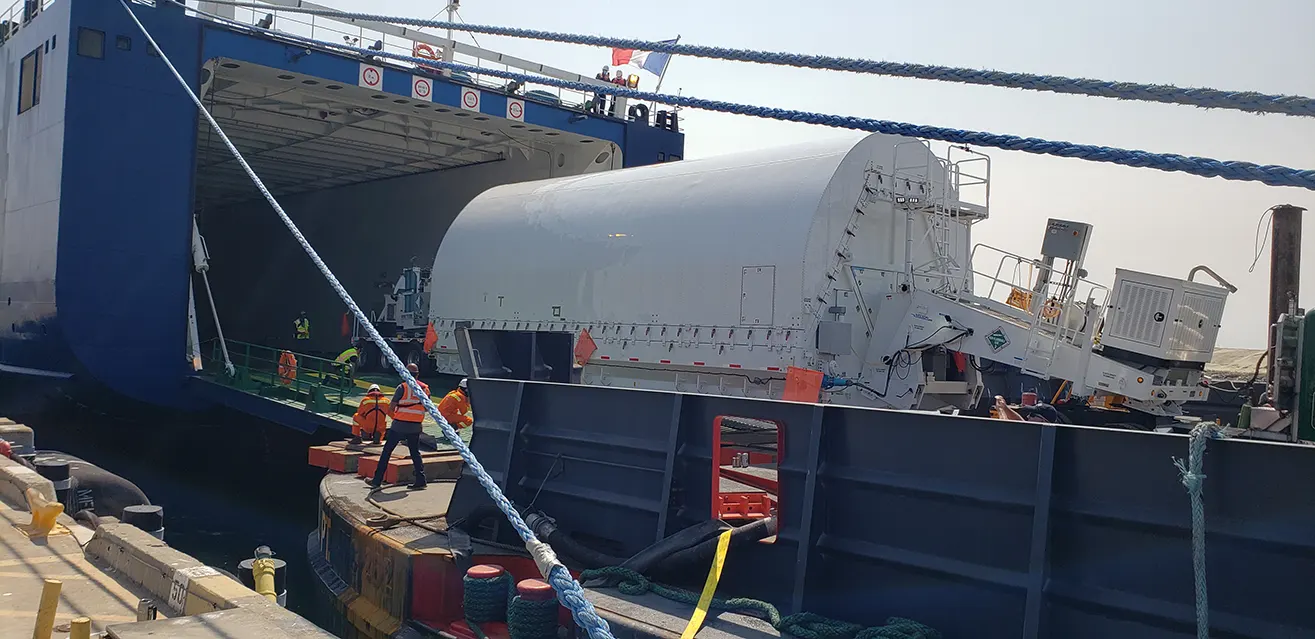
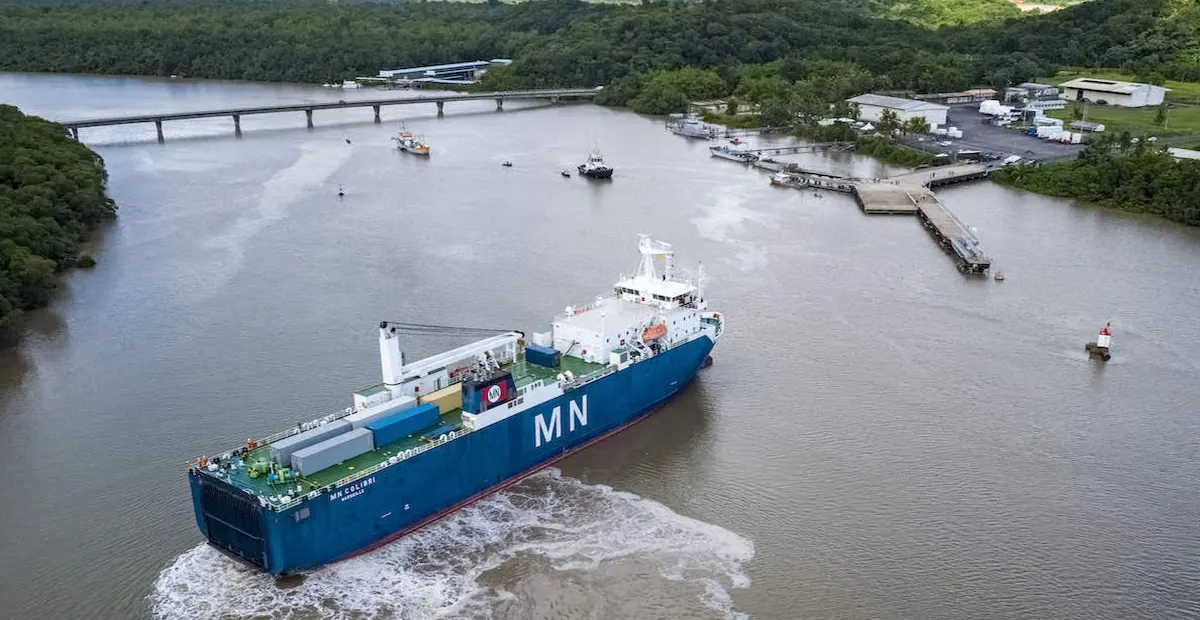
The cargo originated from Northrop Grumman in Southern California and was transported via a night convoy to Naval Weapons Station Seal Beach, then loaded onto the roll-on/roll-off vessel Colibri for a 9,300-kilometer ocean voyage through the Panama Canal to Port de Pariacabo on the Kourou River in French Guiana. It was scheduled for launch from French Guiana on December 18, 2021, from the European Space Agency’s spaceport. This operation highlighted LOGIN FMS Logistics' expertise in handling ultra-sensitive, high-value aerospace shipments.
Background
The James Webb Space Telescope represents a landmark in space exploration, succeeding the Hubble Space Telescope with advanced capabilities to study the universe's earliest galaxies. Rohde & Liesenfeld, through its subsidiary LOGIN FMS Logistics, was tasked with its overland and ocean transport, partnering with Nordholm, a specialist naval engineering firm in Everett, Washington, for route survey, design, and planning. The telescope, housed in a protective clean air chamber, required meticulous handling to preserve its precision instruments.
Under NASA supervision, the project demanded seamless coordination across multiple phases, from initial route assessments using Google Earth and physical surveys to the final discharge in French Guiana. Rohde & Liesenfeld operates a network of offices and air/ocean hubs in over 50 countries and is a member of the Canadian International Freight Forwarders Association and Specialized Carriers and Rigging Association, positioning it as a leader in complex project cargo logistics for the aerospace sector.
The Challenges
Moving the JWST involved navigating extreme sensitivities, as the 332-tonne unit was vulnerable to atmospheric contamination, heat, and any sudden motion or vibration, even while encased in its clean air chamber. “One of the main challenges involved finding a dock on the Southern California coastline that had the clearance of access from the shore side, considering existing road and bridge infrastructure as well as suitable protection from sea swell,” said Jan-Ludwig Beringer, CEO of Rohde & Liesenfeld. “Equally important was finding a suitable dock with the height and fender design to allow for the transition of the telescope chamber from shore to ship.”
The operation was likened to a “10-hour ballet performance where every movement runs at 1/100th of the speed,” requiring patience and expertise from multiple teams to avoid extended exposure to midday heat or undue g-forces. Complex tasks such as this require patience and the expertise of many, emphasizing the need for innovative engineering to manage tidal variations, wind, and sea swell during the dock transfer.
Key Logistical Hurdles
- Selecting an optimal dock like Naval Weapons Station Seal Beach for its proximity, security, dock infrastructure, and ability to support a night convoy to minimize heat exposure.
- Ensuring vibration-free transport over roads and bridges using specialized equipment to handle tight corners, elevation changes, and a walking-pace convoy under California Highway Patrol escort.
- Designing a transfer method to bridge shore and vessel with one-inch tolerance for relative list, compensating for environmental factors like tide and swell while maintaining load-bearing for the massive cargo.
The Solution
Rohde & Liesenfeld's LOGIN FMS Logistics partnered with Nordholm to conduct a detailed route survey, initially using Google Earth and then validating with physical surveys. Naval engineering and all plan designs were produced by Greg Nordholm, PE, using AutoCAD, and Bluebeam design construction software. All design review and planning sessions were undertaken between the parties using Microsoft Teams. The selected route from Redondo Beach to Seal Beach involved a remote-controlled steering axle trailer combination, departing at night with utility vehicles and a California Highway Patrol escort, traveling southbound at walking pace on a closed-off portion of the 405 Freeway and city streets.
At Seal Beach, a floating bridge solution was implemented: a stationary spud barge with legs into the seabed, connected to a flat-deck floating barge (Eel Point) via engineered steel interlocking ramps supplied by Nordholm. Specifically engineered and designed steel interlocking ramps supplied by Nordholm Co. were used for the transition between the dock wall at Seal Beach and the Eel Point flat-deck barge to accommodate both the span and overall load-bearing required for the travel of the telescope from shoreside to seaside and from the barge deck into the ro-ro vessel Colibri. Transport of the telescope was undertaken using a specifically designed hydraulic multi-axle trailer with self-steering dollies that allowed for raising and lowering of the trailer to clear road obstacles and elevation changes and multi-directional movement of the trailer to circumvent tight corners. The telescope was rotated 180 degrees and walked up the ramp into the Colibri's hold under NASA supervision, ensuring a secure and precise handover for the ocean leg.